Envios em 48 horas🚀 Portes Grátis em Encomendas > 40€

Camino de Santiago: The most common injuries.

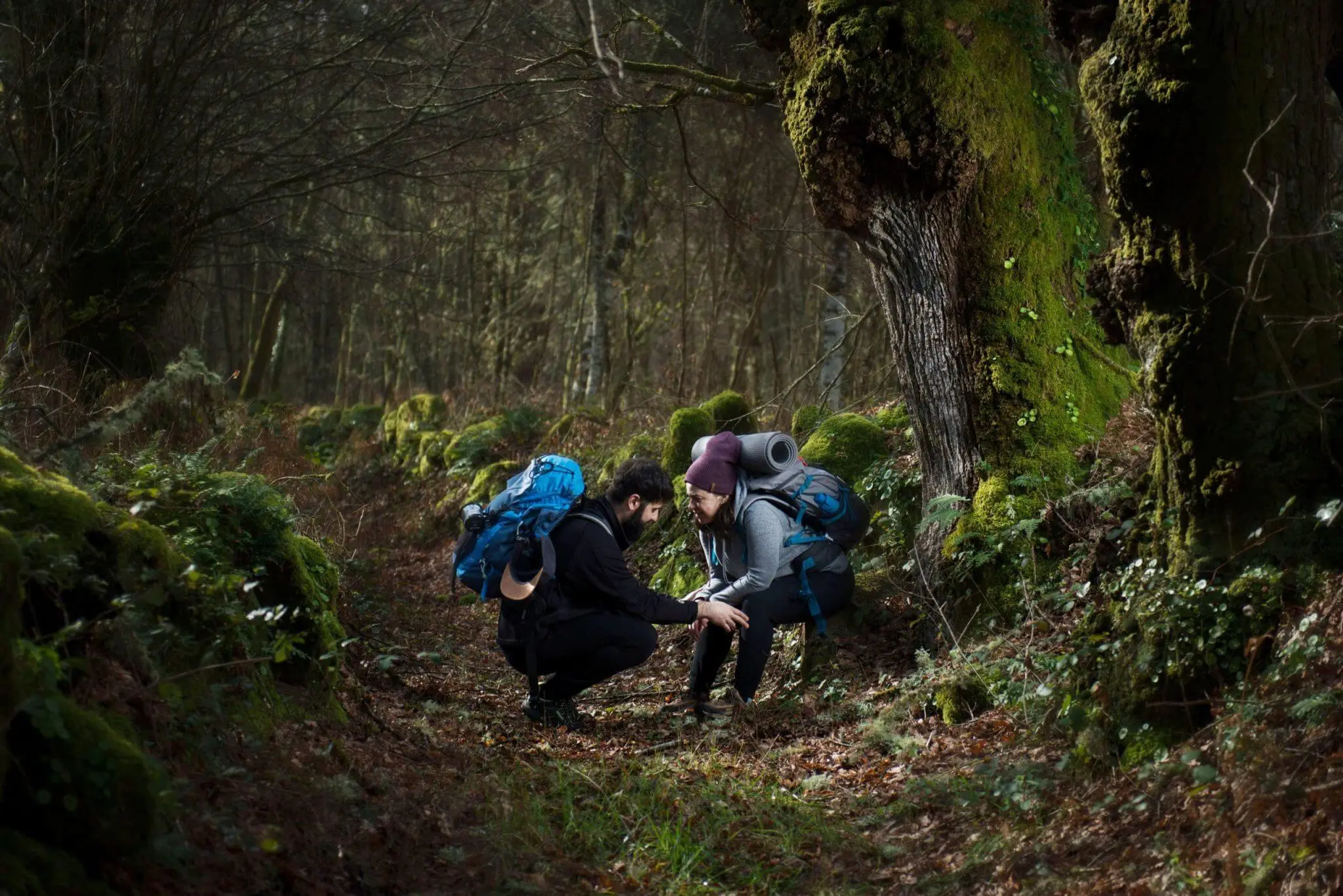
O Camino de Santiago is a transformative experience and, for many pilgrims, an accessible physical exercise. However, even the best prepared can face physical and emotional challenges along the way. Among the main risks are injuries, such as blisters on the feet, leg pain and knee problems, which can compromise the route.
Although most injuries are minor, it is essential to know how to prevent them to ensure a safe and comfortable pilgrimage. In this article, we've put together the most common injuries on the Camino de Santiago and practical tips for avoiding them.
Estimated reading time: 0 minutes
Contents
Blisters on the feet
On the Camino de Santiago, blisters are probably the most common injury among pilgrims. They take up time, energy and sometimes even money. In the worst cases, they become infected, jeopardizing your entire pilgrimage. However, with the right recommendations, they can be avoided.
The first thing to do is buy the right sneakers.
Most blisters happen because, when you buy them, you choose shoes that are less suited to the route you're going to take. So bear the following in mind: firstly, the shoes need to be a little bigger than your feet. For example, if you're a 38 and the store suggests a 40, don't be alarmed. You might feel a bit ridiculous wearing such wide, disproportionate sneakers , but look: as you walk, your feet swell. Really! It's gravity's fault. When you spend many hours walking, it pulls the blood into the veins in your legs, letting some water pass through, causing the swelling.
Which leads to bubbles.
Any repetitive friction can cause them! Blisters are nothing more than reservoirs of fluid that protect the skin when it is under pressure. This is especially the case if you walk several kilometers a day. The combination of swelling and blisters is therefore natural.
So, secondly, the best advice really is: Stop when you need to. Sometimes you think that an extra 5 or 6 kilometers is nothing for someone who has already done 20 in one day, but the worst always happens when you reach your destination. A blister, if it doesn't allow you to carry on as normal, can become infected and it's better to lose a day's walking than the whole route.
That's why wearing the right sneakers, dry socks and knowing when to stop are the best ways to prevent blisters.
Pain in the legs.
In this article, we use leg pain as a generic name for any pain around the tibia, the main bone in the leg. It is, of course, common in runners, dancers and pilgrims.
It tends to happen due to overexertion on the part of the pilgrim. For example, doing 30 kilometers (like the stage from Barcelos to Ponte de Lima) without being used to it. Although it's uncomfortable, most cases can be solved with rest and ice on the area where it hurts.
This pain is due to repeated movements, such as walking, especially with more accumulated weight. This is the combination of the Camino de Santiago: several kilometers a day plus a heavy backpack .
How to prevent it:
A good way to avoid this pain is to distribute the force throughout the body. The use of poles can be a great help in preventing unnecessary injuries, forcing the pilgrim to adopt a correct posture.
Knee pain.
Knee injuries are the most complex, compared to those we mentioned in the article, because they are related to the terrain we share with so many other pilgrims. Because the terrain is uneven - just think of the dirt roads, for example, or the descents to Pontevedra - it forces the joint to bend and unbend. This goes against its inflexible nature. This, added to the weight of the backpacks, is an imperfect opportunity for an injury that is difficult to monitor and care for. Often forcing them to finish their journey early.
How to prevent it:
To prevent this, you should walk with the help of a walking stick, which adds stability to the route. Stretching your muscles every day before you set off will help.
Camino de Santiago: what to do in case of injury.
Although the Camino de Santiago is a safe route taken by thousands of people every year, it's not impossible to end the day with an injury. In such cases, it's important to always have your European Union health insurance cardif you are a European citizen. The card makes it easier to get into hospital and you only pay what you would in your home country. This can lead to significant savings!
Checklist to prevent injuries
[ ] Suitable, new sneakers
[ ] Technical socks and always dry
[ ] Walking poles
[ ] Lightweight, fitted backpack
[ ] Regular breaks
[ ] Stretching before walking
[ ] Health insurance card
[ ] Knowledge of the stages and your limits
What are the most common injuries on the Camino de Santiago?
Blisters on the feet, pain in the legs and knee injuries.
How can I avoid blisters during the pilgrimage?
With suitable footwear, technical socks, regular breaks and attention to the body's signals.
Is it normal to feel pain in your legs for the first few days?
Yes, especially if you're not used to walking long distances.
Do walking poles make a difference?
Yes, they help to distribute the effort and keep your posture correct.
What should you do if a blister appears during the ride?
To stop, clean the area, apply a bandage suitable for blisters and avoid continuing without protecting the injured area.
How to prevent knee pain on uneven ground?
Use poles, stretch and reduce the weight of your backpack.
Do I need health insurance to do the Camino?
It is recommended that you take your European Health Insurance Card with you if you are a European citizen.
Can I continue walking with leg pain?
It depends on the intensity. If it's mild, rest. If it persists, consider stopping.
Is it possible to do the Camino without physical preparation?
Yes, but with a higher risk of injury. Ideally, you should prepare your body with regular walks before setting out on the trail.
What do you do if you have to leave the Camino due to injury?
Seek medical support where you are, find out about transportation and consider resuming at another time.