Blog
Portuguese Coastal or Central Route: What's the Difference?

Estimated reading time: 11 minutes
Choosing between the Portuguese Coastal Way and the Central Way is not easy, especially for those preparing for their first long walk to Santiago de Compostela. Although both are ancient routes, steeped in history and deeply transformative, each offers a different experience. The Coastal Way offers the immensity of the Atlantic, bright trails, and moments of silence by the sea. The Central Way, on the other hand, reveals the rural and historical essence of the Way, with ancient villages, medieval bridges, and a more social experience among pilgrims.

Because they are so different, it is natural to have questions. In this article, we have clearly and practically summarized the advantages, challenges, and main characteristics of each path. This will help you understand which one best suits your pace, your physical condition, and the type of experience you are looking for at this point in your life. At the end, you will also find the Guides, designed to accompany you from the first to the last step, whichever path you choose.
Contents
1. Portuguese Coastal Route or Central Route: what is the difference?
The dilemma between the Coastal Way and the Central Way is very common. After all, both lead to Santiago de Compostela and both offer rich experiences. However, they differ in several important aspects.
Simply put, the Coastal Way follows the Atlantic coastline, revealing open landscapes, fishing villages, and a unique light. The Central Way, on the other hand, crosses the interior of Portugal and Galicia, passing through historic towns, agricultural fields, green valleys, and medieval bridges.
In addition to the landscape, the type of terrain, the level of sun exposure, the number of pilgrims, the flexibility of the route, and even the cuisine also change.

Despite the differences, it is important to remember that both routes eventually join before reaching Santiago. The official Coastal Way joins the Central Way in Valença, before crossing the Minho River to Tui. The Coastal Path, an even closer variant to the sea, connects to the Central Way in Redondela. From there, all pilgrims follow together for the last stages, Pontevedra, Caldas de Reis, Padrón, and finally, Santiago de Compostela.
2. Portuguese Camino de Santiago Coast
The Portuguese Coastal Way offers a bright walk, marked by the sound of the sea, fishing villages, and long lines of horizon. It is an excellent choice for those seeking tranquility, open landscapes, and a physically gentler route.
a. Highlights of the Coastal Trail
- Vila do Conde and the Monastery of Santa Clara
- Póvoa de Varzim, first coastal contact on the official route
- The mills of Apulia, one of the most iconic images of the Camino
- Ofir and the mouth of the Cávado River
- Esposende and its historic center
- Neiva Castle and the coastal environment
- Viana do Castelo and the Eiffel Bridge
- Anchor Beach Village
- Coastal stretch between Âncora and Moledo to Caminha
b. A longer but smoother route
Although it can reach 280 kilometers, especially along the Coastal Trail, the Coastal Path has fewer elevation changes and more regular stages. Thus, despite being longer, it tends to be physically less demanding.
c. A flexible path
One of the great advantages of the Costa is the possibility of adjusting the route along the way. You can switch between the official route and areas even closer to the sea. This freedom allows you to adapt the day to the weather, your energy levels, and the type of environment you are looking for.
d. For those who love the sea
The Coastal Trail is marked by dunes, beaches, small fishing communities, and Atlantic landscapes that change with the tide. Those who find peace by the ocean will feel at home on this route.
e. The Coastal Path
The Coastal Route runs very close to the water, passing through boardwalks, dunes, seafronts, and coastal trails. It is more exposed to the sun and wind, but also more scenic. It joins the Central Route in Redondela.

f. Sun exposure
The light on the coast is intense and the reflection from the sand increases the radiation. Therefore, hydration, sunscreen, and a hat are essential.
g. A more peaceful environment
Compared to the Central Way, the Coastal Way receives fewer pilgrims. As such, it offers more silence, introspection, and a more serene pace.
3. Central Portuguese Way
The Central Portuguese Way is the historic and traditional route. It is deeply cultural, diverse, and full of places with centuries of connection to pilgrimage.
a. Highlights of the Central Path
- Porto Cathedral
- Vairão Monastery
- Barcelos and the historic center
- Ponte de Lima and the medieval bridge
- Serra da Labruja, the biggest physical challenge of the route
- Rubiães and the Roman road
- Saint Benedict of the Open Door
- Paços and its characteristic rural landscape
- Roman road to São Pedro da Torre
- Final rural crossing before Valença
b. A journey steeped in history
The Central passes through ancient villages, churches, Roman roads, and medieval bridges. Each stage reflects centuries of pilgrimage and tradition.
c. Great natural diversity
Rivers, forests, vineyards, valleys, and hills form a varied inland landscape. The river beaches of Barcelos and Ponte de Lima are perfect places to relax at the end of the day.
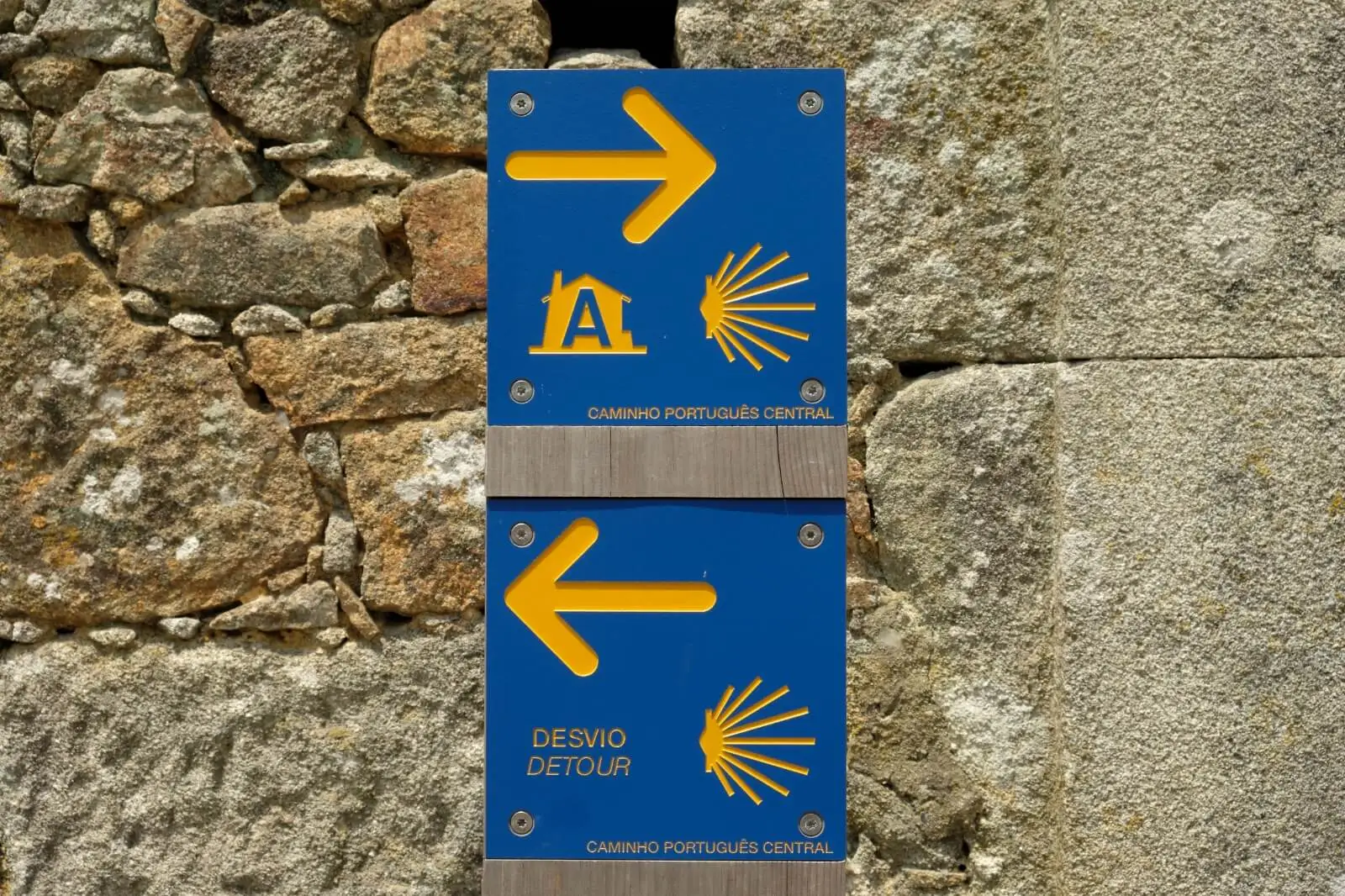
d. Clear signage and intuitive route
It is the best marked route, ideal for those who prefer simplicity and safety when navigating.
e. A more social path
As the most popular route, the Central route facilitates interaction with pilgrims from all over the world. The connections made along the way often become an essential part of the experience.
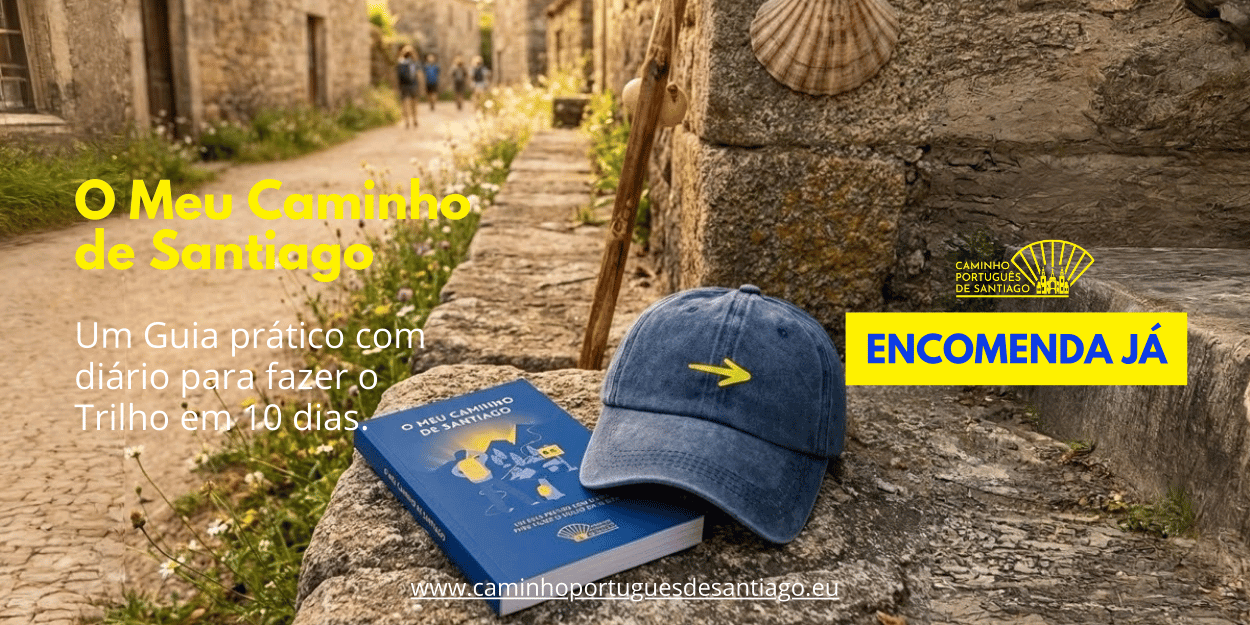
f. The ideal itinerary for those who have 10 days
The Central Path can easily be adjusted to ten stages. This allows for a good balance between effort, rest, and exploration.
g. Gastronomy and culture
The route passes through some of the best gastronomic areas of Minho and Galicia, where culture is also experienced at the table.
4. So, which one do you prefer? Coastal Route or Central Route?
The decision between the Coastal Route and the Central Route depends on what you are looking for at this stage of your life.
If you enjoy open landscapes, silence, and the company of the sea, the coast is the ideal choice. The route is gentler, more flexible, and brighter.
If you prefer history, tradition, and the classic atmosphere of the Camino, the Central offers exactly that. It is more social, has more infrastructure, and passes through rural villages, medieval bridges, and towns deeply connected to pilgrimage.
In summary, the coast offers tranquility and flexibility, while the central region offers social interaction, history, and greater logistical ease. There is no one path that is better than another; there is only the right path for you, right now.
5. There is a Guide for each path
Regardless of the route you choose, there is a comprehensive and practical guide to accompany you in your preparation and during the hike.
a. Guide to the Central Portuguese Way
“My Camino de Santiago
b. Guide to the Portuguese Coastal Way
7. Conclusion
Ultimately, choosing between the Coastal Way or the Central Way is choosing how you want to experience your walk to Santiago. If you are looking for wide horizons, silence, and the constant company of the sea, the Coastal Way offers you exactly that. If you prefer tradition, heritage, and the collective energy of those walking side by side, the Central Way will probably be your home during those days.
Neither is better than the other. Each route has its own beauty, its own challenges, and its own way of transforming those who travel it. Rather than deciding which path to take, it is more important to choose the one that calls to you now, the one that allows you to move forward with truth, intention, and a willingness to listen to what each kilometer has to say.
And remember: you are not alone. Whether you go via the Coastal Way or the Central Way, there are resources, practical guides, and an entire community ready to help you prepare for each stage. The Way begins before you start walking and continues long after you arrive in Santiago. The most important thing is simply to get started.
It depends on the type of difficulty you consider most relevant. The Coastal Route has fewer ascents and descents, making it physically easier. However, it is longer and more exposed to the sun and wind. The Central route is more demanding in terms of elevation, especially in the Serra da Labruja, but it is more sheltered and has more balanced stages. For those who prefer flat terrain, the Coastal route is easier; for those who cope well with climbs, the Central route feels more natural.
Yes, and it's quite common. If you follow the official route along the coast, you'll find the Central in Valença, before crossing the Minho River to Tui. If you choose the Coastal Route, the connection happens later, in Redondela. From there, all pilgrims follow together for the last stages: Pontevedra, Caldas de Reis, Padrón, and Santiago de Compostela. Mixing the routes is an interesting way to experience the best of both.
The Central Way is the second most popular route chosen by pilgrims traveling to Santiago. Therefore, during the high season (June to September), it is normal to encounter more hikers, especially between Valença and Santiago, where many begin their journey to complete the minimum 100 kilometers required for the Compostela. Outside of the high season, the flow of people is much more balanced, allowing for a more spacious and peaceful walk.
Yes, but there are fewer options than on the Central Way. Along the coast there are public and private hostels and a few other types of accommodation, although they are more spread out. In the summer months, it is advisable to book in advance, especially in popular areas such as Viana do Castelo and Vila Praia de Âncora. However, with a little planning, it is perfectly possible to do the route without any worries.
Yes. The only factor determining whether you receive the Compostela is the distance traveled: you need to complete the last 100 kilometers to Santiago, regardless of the route. So, whether you come via the Coastal Way or the Central Way, when they meet in Valença or Redondela, you will already meet the official requirement.
Yes. Proximity to the sea increases sun exposure due to reflection from the sand and water. Even on cloudy days, UV rays pass through the clouds and can cause burns. Therefore, sunscreen, a hat, and constant hydration are essential on the coast. In the central area, there are more shaded areas, but protection is still necessary.
The Central route is the one most closely linked to the historical tradition of Camino de Santiago. It passes through ancient villages, churches, monuments, medieval bridges, and old Roman roads. In addition, social life among pilgrims tends to be more intense on this route. The Coastal route, on the other hand, is more marked by its relationship with the sea, fishing communities, and peaceful atmosphere. Both have great cultural value, but in different ways.
The Central Route is usually the most recommended choice for beginners. It has better signage, more services, more hostels, and allows for a more structured experience. In addition, it offers a greater sense of security for those who are doing the route for the first time without knowing exactly what to expect. The Coast remains an excellent option, but requires more attention to the sun and planning.
It's not mandatory, but it makes a big difference. A good guidebook brings together maps, stage profiles, accommodation and food suggestions, points of interest, packing lists, and even reflection exercises. This prevents planning mistakes and reduces anxiety during the hike. Plus, it's a great souvenir of the trip and valuable support in areas with poor internet connection.
Best-selling products
-

Credential Kit + Pilgrim's Shell
10,00 € -
Pilgrim Credential
5,00 € -
My First Path" kit
The original price was €32.00.27,00 €The current price is: €27.00. -
My First Coastal Walk Kit
The original price was €32.00.27,00 €The current price is: €27.00. -
Camino de Santiago calendar 2026
10,00 €