The Central Portuguese Way: An 11-Day Itinerary
If you’re one of those who want to experience the Camino from the very beginning—from the first step, from the first dawn already on the trail—this is the route for you. In 11 days, you’ll cover more than 240 km along the Central Portuguese Way, travel through the heart of the Minho region, cross the border, and spend another 6 days in Galicia until you reach Santiago de Compostela with vivid memories of everything this route has to offer.
This section embodies the Camino in its purest form: it begins in Portugal’s second-largest city, passes through medieval villages, Vinho Verde valleys, the Minho mountains, and riverside fortresses, before entering Galicia and continuing through the cities along the Way of St. James to the Praza do Obradoiro. Each stage has its own character: the urban atmosphere of Porto, the rural Minho, the symbolic border at Valença, the growing intensity of Pontevedra and Padrón, and the thrilling arrival in Santiago.
It’s the ideal route for anyone who wants to walk the Camino without taking shortcuts, for those seeking a genuinely transformative experience, or for those who simply need time: time to walk, to think, to rediscover themselves. A journey that begins in Porto but that, in truth, begins much earlier: the moment you decide you want more than just to arrive.
Exit:
- Porto
Arrival:
The Central Portuguese Way in 11 days:
Day 1 — PORTO → VAIRÃO
Distance: ~25 km
Average time: 6 hours
Difficulty: Moderate
Highlights: Porto Cathedral · Carvalhido Parish Church · São Pedro de Araújo Church · Mosteiró · São Salvador de Vairão Monastery
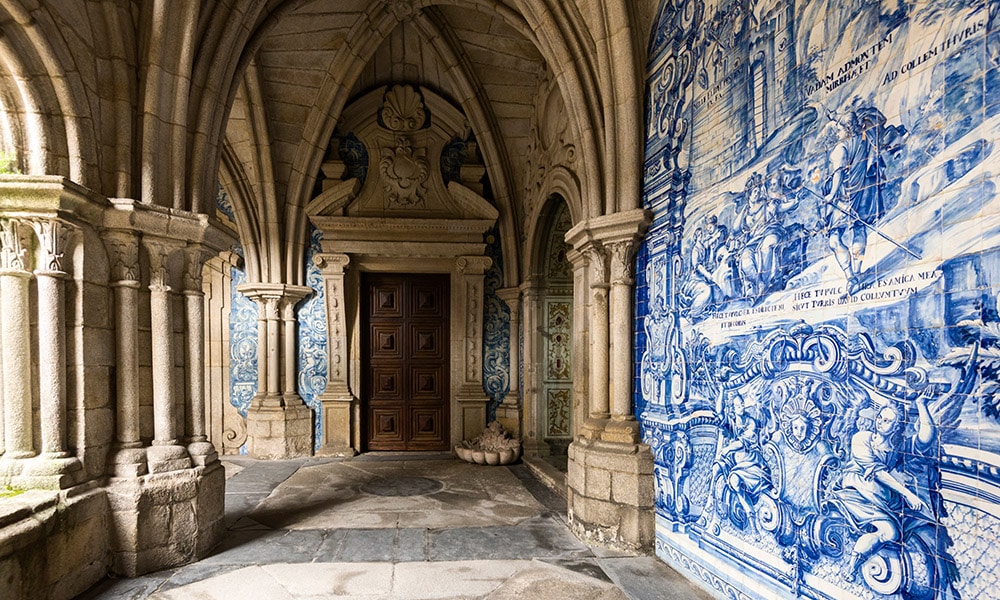
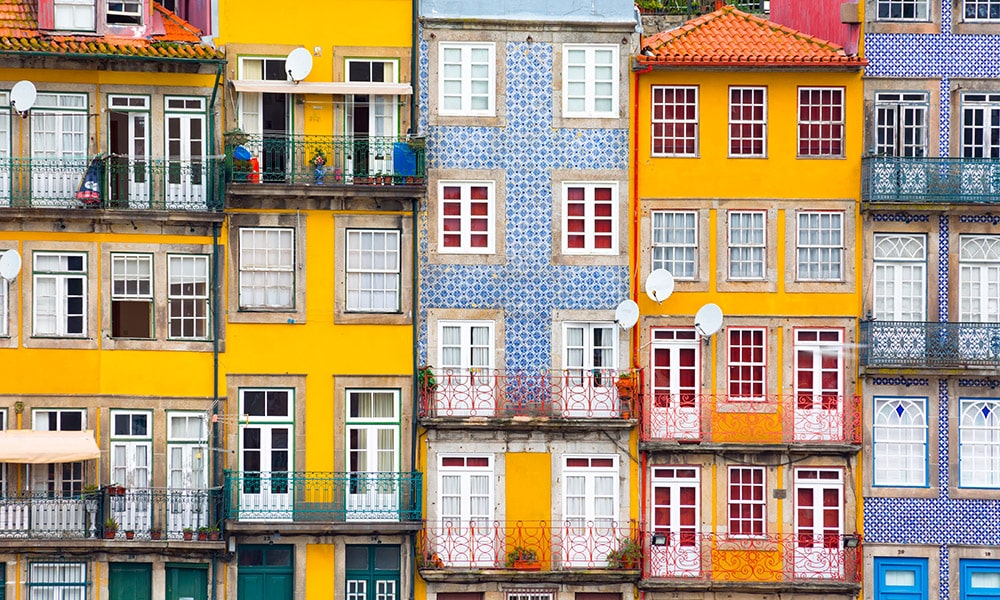
The route begins at Porto Cathedral, amid ancient streets, azulejos, and wine cellars. The route winds through the “Unconquered City” with its ever-changing landscape—from the bustling historic center to the semi-rural areas on the outskirts. For architecture enthusiasts, it’s a fascinating stretch; for those who prefer nature, the reward comes at the end, with the arrival in Vairão amid vast greenery and the imposing monastery hidden among ancient trees.
Day 2 — VAIRÃO → BARCELOS
Distance: ~30 km
Average time: 8 hours
Difficulty: Moderate
Highlights: Monastery of São Salvador · São Miguel dos Arcos · Romanesque Church of São Pedro de Rates · Pedra Furada · Medieval Bridge over the Cávado River · Barcelos
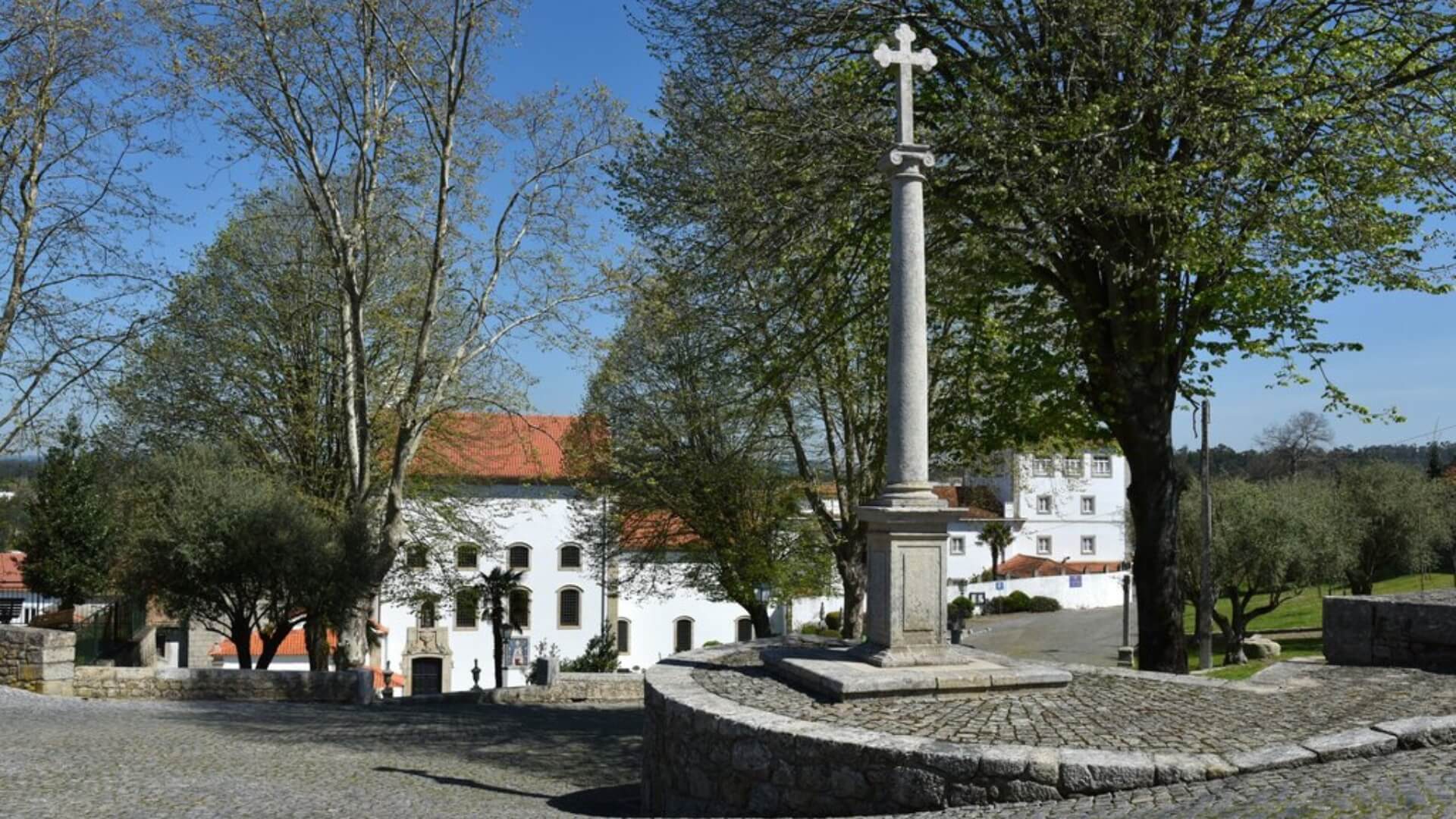
After passing through the city of Porto, the landscape opens up to green fields, vineyards, and dirt roads. The Way winds through the heart of the Minho region: quiet villages, granite churches, fountains, and a side of Portugal that the asphalt has gradually hidden from view. Arriving in Barcelos is one of the most memorable moments of the Central Way—the medieval bridge over the Cávado River is an almost solemn passage between what has been left behind and what is yet to come.
Day 3 — BARCELOS → PONTE DE LIMA
Distance: ~33 km
Average time: 7 hours
Difficulty: Moderate
Highlights: Historic center of Barcelos · Vila Boa · Church of São Tiago de Aborim · Vitorino dos Piães · Correlhã · Romanesque Bridge of Ponte de Lima
A long but rewarding stage, with granite paths, stone granaries, and rolling vineyards in the Vinho Verde region. The terrain alternates between gentle climbs and open valleys, and the light of the Minho transforms fatigue into something almost sacred. Arriving in Ponte de Lima—Portugal’s oldest town—with the sun shining on the Romanesque bridge and the Lima River flowing by, is one of those moments that makes the entire journey worthwhile.
Day 4 — PONTE DE LIMA → RUBIÃES
Distance: ~19 km Average time: 5 h Difficulty: Difficult Highlights: Arcozelo · Labruja · Cruz dos Mortos · São Roque · Rubiães Parish Church
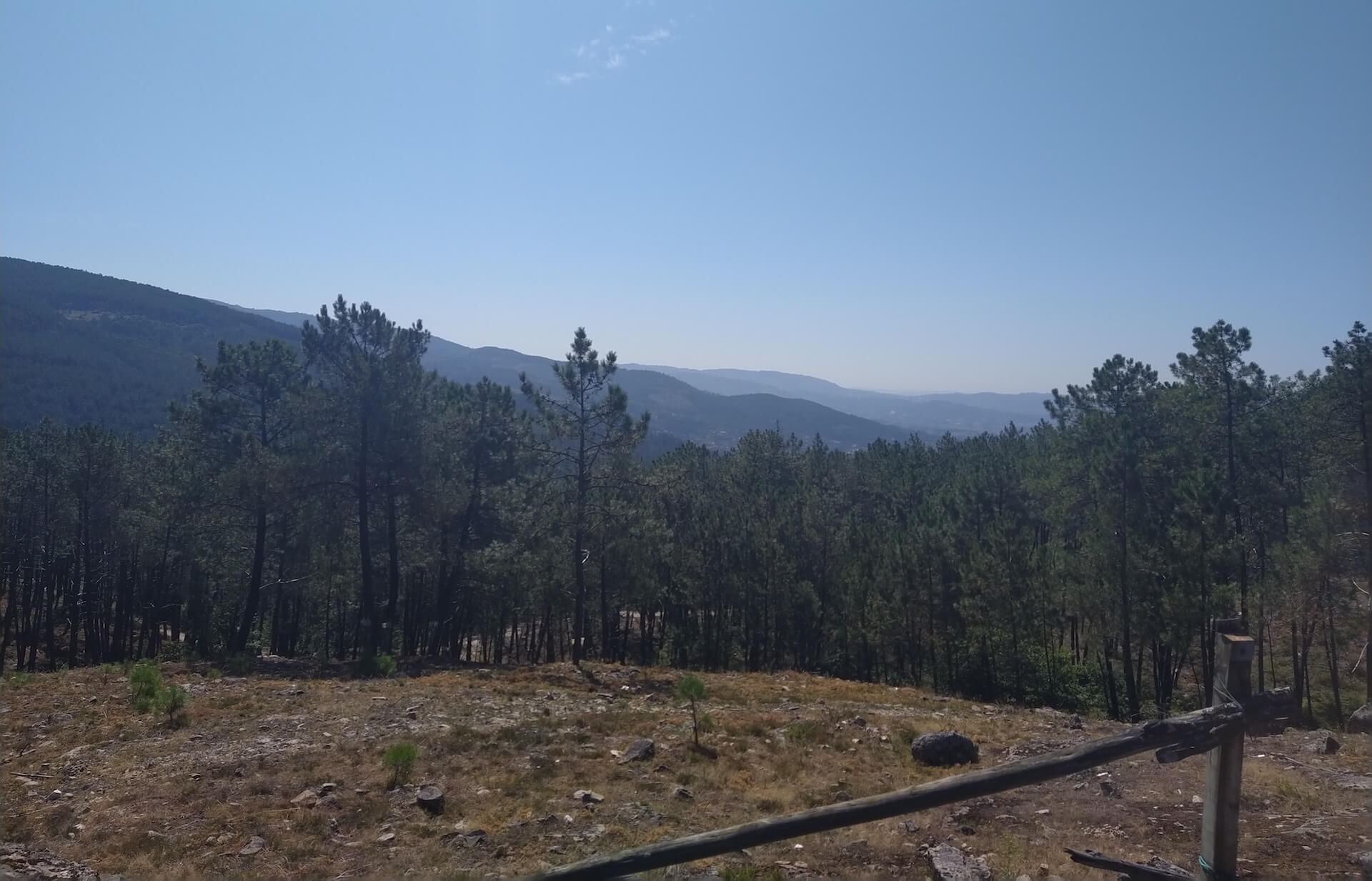
The shortest stage of the Central Route, but not the easiest. The route leaves the Lima Valley and climbs up the slopes covered with oak and chestnut trees to the plateau, offering panoramic views of the entire region. The Cruz dos Mortos—where, over the centuries, pilgrims who died along the way were buried—is the most symbolically significant point on the entire route. Rubiães awaits at the summit with disarming simplicity.
Day 5 — RUBIÃES → VALENÇA
Distance: ~18 km Average time: 5 h Difficulty: Moderate Highlights: São Bento da Porta Aberta · Fontoura · Ponte da Pedreira · Valença City Walls · Minho River · View of Tui
The final leg of the Portuguese route is taken at a leisurely pace, descending toward the Minho. The Sanctuary of São Bento da Porta Aberta is one of the most revered in the region, with centuries-old votive offerings and a genuine sense of devotion. The arrival in Valença takes place along the city walls—entering through the fortress gate is one of the most cinematic moments of the entire Camino. From the top, the Minho River flows below, and Tui awaits on the other side, with Santiago closer than ever.
Day 4 — PONTE DE LIMA → RUBIÃES
Distance: ~19 km
Average time: 5 hours
Difficulty: Difficult
Highlights: Arcozelo · Labruja · Cruz dos Mortos · São Roque · Rubiães Parish Church
The shortest stage of the Central Route, but not the easiest. The route leaves the Lima Valley and climbs up the slopes covered with oak and chestnut trees to the plateau, offering panoramic views of the entire region. The Cruz dos Mortos—where, over the centuries, pilgrims who died along the way were buried—is the most symbol-laden spot on the entire route. Rubiães awaits at the summit with disarming simplicity.
Day 5 — RUBIÃES → VALENÇA DO MINHO
Distance: ~18 km
Average time: 5 hours
Difficulty: Difficult
Highlights: São Bento da Porta Aberta · Fontoura · Ponte da Pedreira · Valença City Walls · Minho River · View of Tui
The final leg of the Portuguese route is taken at a leisurely pace, descending toward the Minho. The Sanctuary of São Bento da Porta Aberta is one of the most revered in the region, with centuries-old votive offerings and a genuine sense of devotion. The arrival in Valença takes place along the city walls—entering through the fortress gate is one of the most cinematic moments of the entire Camino. From the top, the Minho River flows below, and Tui awaits on the other side, with Santiago closer than ever.
Day 6 — VALENÇA → PORRIÑO
Distance: ~12.4 miles
Average time: 5–6 hours
Difficulty: Easy
Highlights: Walls of Valença • International Bridge • Historic town of Tui • Tui Cathedral • Cross of San Telmo • Pilgrim's Wall
The Way begins with the symbolic crossing of the International Bridge over the Minho River. In Tui, the cathedral and medieval streets mark the perfect start to the walk. The route continues along green trails and through humid forests to Orbenlle and the famous Pilgrim's Wall. The arrival in O Porriño brings a more urban and lively atmosphere.
Day 7 — PORRIÑO → REDONDELA
Distance: ~9.3 miles
Average time: 4–5 hours
Difficulty: Moderate
Highlights: Rural trails • Chan das Pipas • First views of the Vigo estuary • Junction of the Camino routes
A day with more demanding climbs, but also one of the most beautiful. Between rural villages and open landscapes, the first views of the Vigo estuary appear. The climb to Chan das Pipas is intense and the descent to Redondela requires calm. Here, the Costa and Caminho Central routes join, bringing more pilgrims and a new rhythm.
Day 8 — REDONDELA → PONTEVEDRA
Distance: ~19 km
Average time: 5–6 hours
Difficulty: Moderate
Highlights: Views over the Vigo estuary • Medieval bridge of Sampaio • Arcade • Historic center of Pontevedra
A balanced stage between nature, history, and traditional villages. The views over the Vigo estuary mark the start of the day. There are some uneven sections, especially near the medieval bridge of Sampaio. The arrival in Pontevedra is one of the highlights of the route, with a vibrant city full of Jacobean tradition.
Tip: in Arcade, try the oysters—they are a classic of the Camino.
Day 9 — PONTEVEDRA → CALDAS DOS REIS
Distance: ~22 km
Average time: 5–6 h
Difficulty: Moderate
Highlights: O Burgo Bridge • Wooded trails • Barosa Waterfalls • Santa Lúcia Chapel • Hot springs
One of the most peaceful and beautiful stages, full of shade, streams, and woods. The exit via the ancient bridge of O Burgo opens the way to charming rural trails. You will find the detour to the Spiritual Variant and magical places such as the Barosa Waterfalls. Caldas de Reis welcomes you with the comfort of its thermal waters.
Tip: take short breaks in the shaded sections to enjoy nature.
Day 10 — CALDAS DE REIAS → PADRÓN
Distance: ~19 km
Average time: 5–6 hours
Difficulty: Easy to moderate
Highlights: Cool trails • Roman roads • Bermaña River • Historic arrival in Padrón
A charming stage, marked by cool forests, peaceful trails, and villages bustling with local life. The sound of water accompanies much of the route. The arrival in Padrón is special: according to tradition, it was here that the boat carrying the body of St. James the Apostle arrived.
Day 11 — PADRÓN → SANTIAGO DE COMPOSTELA
Distance: ~15 miles(
) Average time: 6–7 hours(
) Difficulty: Moderate(
) Highlights: Santuario da Escravitude • O Milladoiro • Entrance to Santiago • Praça do Obradoiro
The final stage is a moment of great emotion. Between rural villages and urban areas, each step brings you closer to the Cathedral. Passing through O Milladoiro announces that Santiago is near. Arriving at the Plaza del Obradoiro is the climax of the entire pilgrimage.


📦 What's Included:
11 nights at selected accommodations, always in private rooms with en suite bathrooms for greater comfort and rest;
Personal Accident Insurance;
Offer: 1:1 Planning Session – 45 minutes to answer all your questions
Checklist of what to pack in your backpack;
Complete itinerary with daily maps;
Exclusive WhatsApp group for sharing and asking questions during the Camino.
➕ Optional Extras
- Additional night in Santiago de Compostela;
Return transfer to Porto;
Luggage transport between stages;
✨ Advantages of Doing the Camino with Everything Organized
Accommodation guaranteed even during the busiest seasons
Balanced stages and optimized route
Safer, lighter, and more comfortable journey
Time to enjoy, without logistical stress
Support and sharing throughout the entire experience
Ideal for beginners, those with limited time, or those who want to obtain the Compostela