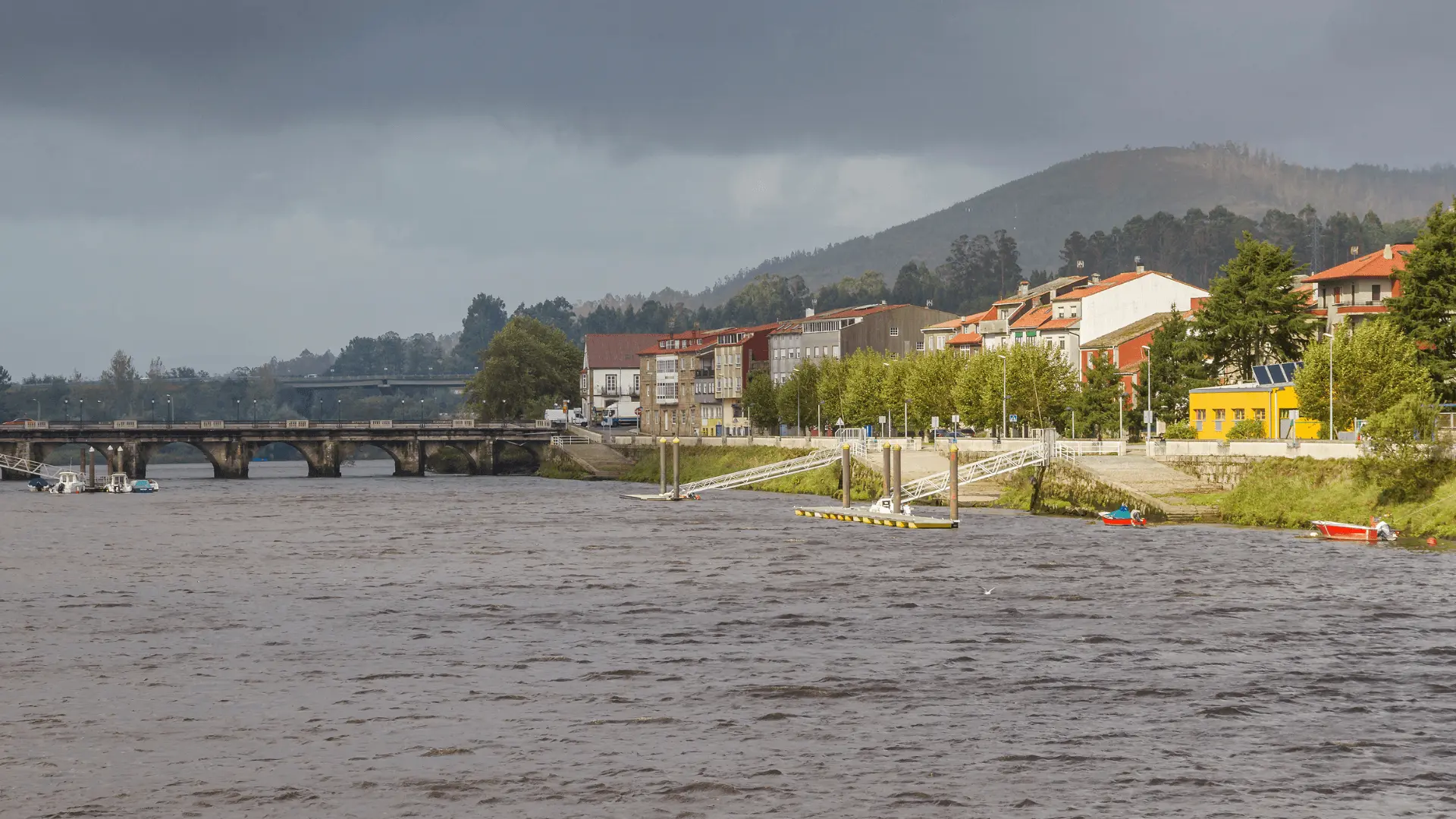
The journey between Vilanova de Arousa and Padrón is unique on the Camino: it begins at sea. The boat follows the route of the Traslatio, evoking the ancient crossing that, according to tradition, transported the body of St. James the Apostle to Iria Flavia. It is the only sea-river route on the entire Camino de Santiago, a moment of contemplation in which the horizon is filled with seagulls, cruises on the water, small islands, and traces of ancient fortifications.

During the trip, the boat follows the maritime Via Crucis, marked by 17 granite crosses that stand out as landmarks of devotion. Along the way, there are historical references such as the Church of San Miguel de Catoira and the Torres de Oeste towers, which for centuries guarded the entrance to the Ulla against invasions from the sea.

The arrival on dry land takes place in Pontecesures. The sound of the engine disappears and the rhythm of footsteps returns. After crossing the Roman bridge, the Way leads you to Padrón, a central place in the Jacobean tradition and one of the strongest spiritual points in Galicia.

Tip: Secure your reservation with Traslatio in advance and confirm the boat schedule the day before, as departure times depend on the tides.

Arrival:


Vilanova de Arousa-Padrón: Photographs

Vilanova de Arousa-Padrón: Itinerary

A: The Traslatio

The Way begins on the water: the boat departs from Vilanova de Arousa and glides along the estuary as if following an ancient story. The Traslatio is a unique stretch, where the silence of the sea mingles with the granite crosses that emerge like beacons of devotion. Each milestone of the maritime-fluvial Via Crucis seems to tell a fragment of the legend that guides pilgrims inland.

As the boat gains distance, the Church of San Miguel de Catoira appears on the shore, discreet but striking. The small temple marks a historically important site, once responsible for watching over those who sailed up the Ulla and protecting the interior of the valley.

Shortly afterwards, your gaze falls upon the Torres de Oeste towers, now in ruins. These structures were built in the 9th century by Alfonso III to protect the estuary from Norman attacks. What remains are fragmented walls and sturdy towers, reminders of the defensive and turbulent past of this region of Galicia.

The arrival on dry land takes place in Pontecesures, where the Way leaves the boat and returns to the rhythm of footsteps. The Roman bridge, restored in the Middle Ages, leads pilgrims over the Ulla River and marks the entrance to the territory of Padrón.

The historic center of Padrón is lively and full of little corners that invite you to linger. After the walk, there's nothing better than tasting the famous peppers and enjoying the warm atmosphere of the village.

Vilanova de Arousa-Padrón: Map