Blog
Portuguese Coastal Way – The complete guide to planning your pilgrimage

Estimated reading time: 13 minutes
ThePortuguese Coastal Wayis now one of the most popular routes to Santiago de Compostela. Its constant proximity to the Atlantic Ocean, diverse landscapes, good infrastructure, and balance between nature and urban settings have made it an increasingly popular choice for pilgrims from all over the world. This guide was created to offer you an in-depth, clear, and structured overview ofthe Coastal Way, fromits official route to its history, including the latest official data and practical decisions that make all the difference in planning.

Contents
- What is the Portuguese Coastal Way?
- History of the Portuguese Coastal Way
- Growth, affluence, and profile of pilgrims on the Coastal Way
- Route, kilometers, and stages of the Portuguese Coastal Way
- What makes the Coastal Trail special
- And the Coastal Trail
- Frequently asked questions about the Portuguese Coastal Way (FAQ)

What is the Portuguese Coastal Way?
The Portuguese Coastal Way is not just a route along the sea. It is a route with its own identity, marked by its constant relationship with the ocean, the Atlantic light, and a more open and breathable rhythm.
Walking along the coast means passing through seaside towns, fishing villages, urban areas, and coastal trails, always with the sea close by. This connection to the coast influences the landscape, the climate, the physical effort, and the daily experience of the pilgrim.

From an official standpoint, it is essential to understand exactly how this path is defined.
In formal terms, the Coastal Path
• connectsPortoto Valença do Minho
• mainly follows the Portuguese Atlantic coastline
• from Valença, it connects to the common route to Santiago de Compostela
The Coastal Way as a route in its own right corresponds to the segment from Porto to Valença do Minho.
History of the Portuguese Coastal Way
The Portuguese Coastal Way developed in a territory historically marked by human movement, maritime trade, and connections between ports, coastal towns, monasteries, and urban centers. Long before there was a formal Jacobean route, these areas were traversed by merchants, sailors, travelers, and the faithful.
With the consolidation of the cult of Santiago from the 9th century onwards, these coastal routes also began to be used by pilgrims, especially those who arrived by sea or who preferred to travel along the coast. There was no single fixed route, but rather several possible routes adapted to the conditions of the terrain and the needs of each era. The current Coastal Way is the result of contemporary appreciation and organization of these historical axes of circulation, and is now an official route that is signposted and adapted to the modern pilgrim.
Growth, affluence, and profile of pilgrims on the Coastal Way
(official data from 2025 fromthe Pilgrim's Office)
Official data from 2025 from the Pilgrim's Office in Santiago de Compostelaconfirms what is felt on the ground. The Portuguese Coastal Way is now a fully established route, with consistent demand and international recognition.
In 2025,89,509 pilgrimschose the Portuguese Coastal Way, making it one of the fastest-growing routes in Portugal. These figures reflect confidence in the signage, available infrastructure, and overall quality of the experience, confirming the Coastal Way as a conscious choice.
Traffic throughout the year shows clear seasonality
• lower demand in January, February, and December
• progressive growth from March onwards
• peaks in May and September
• gradual decline from October onwards
Spring and early fall offer the best balance between climate and tranquility.
The profile of the Coastal Way is markedly international. Based on a total of 89,509 pilgrims, the following stand out:
• Spain 19.9%
• United States 12.2%
• Germany 10.5%
• Italy 6.3%
• Portugal 4.4%
• United Kingdom 3.0%
• Canada 2.5%
• Czech Republic 1.8%
• Australia 1.6%
More than 75% of pilgrims are foreigners, confirming the route's strong international appeal.
Route, kilometers, and stages of the Portuguese Coastal Way
Before setting dates, pace, or accommodations, it is essential to understand how the Portuguese Coastal Way is structured, where it begins, where it ends as a route in itself, how many kilometers it covers, and how it can be organized into stages.
The Way traditionally begins at Porto Cathedral and follows the Atlantic coastline to Valença do Minho, where the official route along the coast ends and joins the common route to Santiago de Compostela.
In terms of distance
• Porto to Valença do Minho approximately 150 km
• Porto to Santiago de Compostela approximately 280 km considering the continuity after Valença
One of the great advantages of the Coastal Way is its flexibility. The stages can be adapted to the time available and the pace of each pilgrim.
Proposal for a balanced pace
•Porto – Póvoa de Varzim approx. 31 km
• Póvoa de Varzim – Marinhas, Esposende approx. 25 km
•Marinhas – Viana do Castelo approx. 24 km
• Viana do Castelo – Caminha approx. 27 km
•Caminha Valença do Minho approx. 30 km
Approximate total 137 km
Average duration: 5 days
Longer journey, fewer kilometers per day
• Porto – Vila do Conde approx. 23 km
• Vila do Conde – Póvoa de Varzim approx. 5 km
• Póvoa de Varzim – Apúlia approx. 14 km
• Apúlia – Marinhas, Esposende approx. 9 km
• Marinhas – Viana do Castelo approx. 21 km
• Viana do Castelo – Vila Praia de Âncora approx. 18 km
• Vila Praia de Âncora – Caminha approx. 10 km
• Caminha – Vila Nova de Cerveira approx. 14 km
• Vila Nova de Cerveira – Valença do Minho approx. 10 km
Approximate total 150 km
Average duration: 9 days
Preparing for the Portuguese Coastal Way: where to stay and how to find your way around
Good preparation is one of the factors that most influences the experience on the Portuguese Coastal Way. Although it is an accessible and well-structured route, simple decisions such as choosing the right season, the type of accommodation, or the form of guidance along the route have a direct impact on physical comfort, mental tranquility, and the way the journey is experienced.
Best time to do the Coastal Way
The Coastal Trail can be walked all year round. The Atlantic climate and constant proximity to the sea make the choice of season particularly relevant. Wind, humidity, daylight hours, and temperature influence the daily pace and level of comfort during the walk.
In general
• April to June offer an excellent balance between mild weather and fewer pilgrims
• July and August have longer days and are busier, with hotter weather
• September is one of the best choices of the year, combining good weather with greater tranquility
• October offers a quieter experience with shorter days
• Winter is possible but requires greater attention to the weather and the availability of services
For most pilgrims, spring and early fall are the most balanced times to walk the Coastal Way.
Where to stay on the Coastal Way
The range of accommodation along the Portuguese Coastal Way is varied and sufficient to meet demand, especially when planned in advance. The choice of accommodation influences your rest, the pace of the following day, and the overall experience of the route.
Along the route you will find
• public hostels, which are generally more economical
• private hostels offering greater comfort and the possibility of booking
• hostels, mainly in urban areas
• guesthouses and small hotels, ideal for those seeking more privacy
During the busiest months, it is advisable to book in advance, especially in the most popular locations. In quieter seasons, there is greater flexibility to decide along the way.
Signage and guidance
One of the great advantages of the Portuguese Coastal Way is the quality of its signage, which makes it suitable even for those walking the Camino for the first time. In addition, understanding how the orientation works helps to avoid unnecessary doubts, especially in urban areas.
The route is marked by
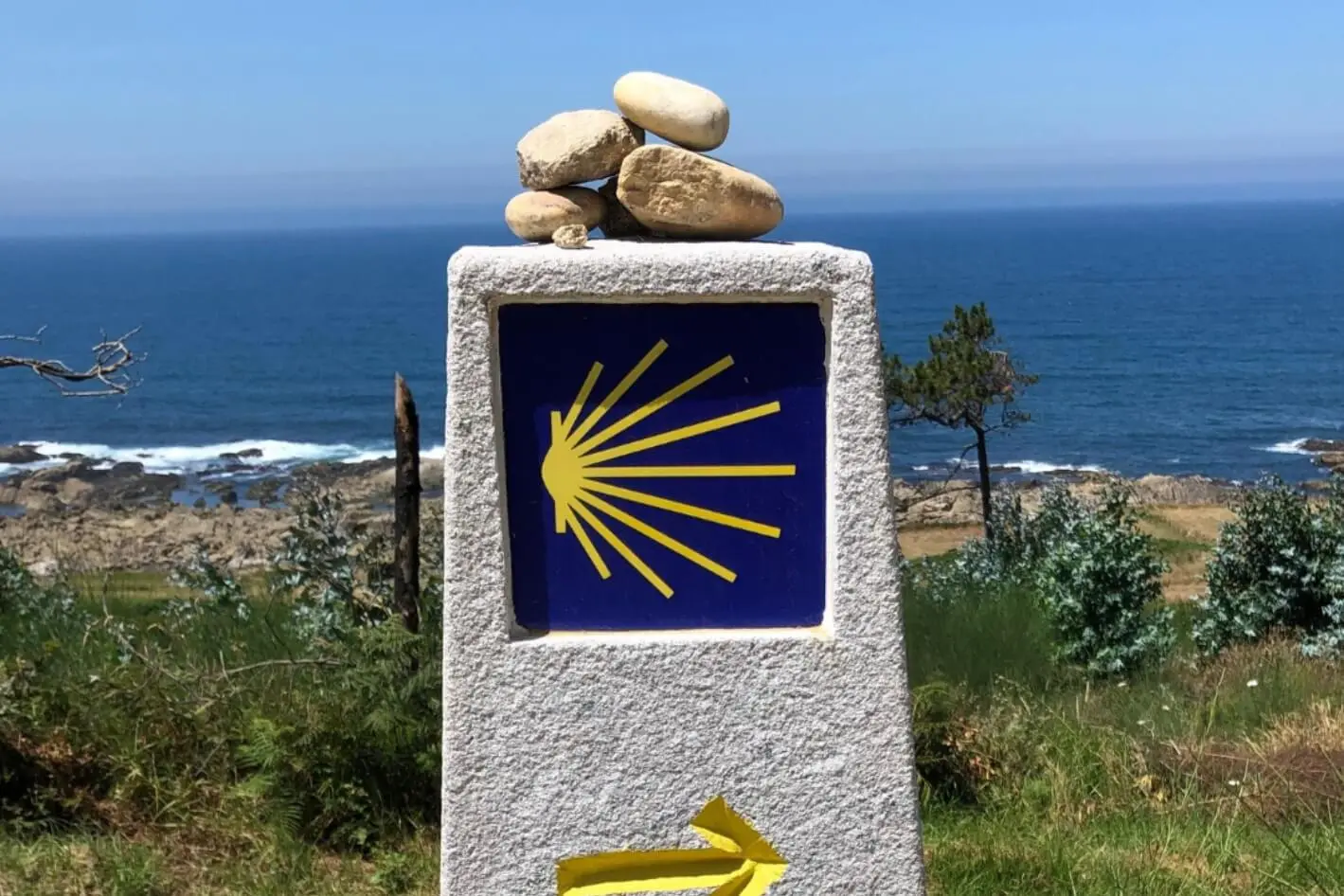
• yellow arrows painted on walls, posts, and pavement
• official Camino de Santiago markers
• specific signs for the coastal route
In urban areas or places with construction work, extra caution should be exercised. It is advisable to walk with up-to-date information, a reference guide, or a support application with offline maps.
Good signage guides the way. Good preparation gives pilgrims peace of mind.
What makes the Coastal Trail special
The Portuguese Coastal Way stands out for the way it combineslandscape, rhythm, and inner experience. Walkingalongside the ocean creates a different relationship with time and with one's own body. The open horizon, the Atlantic light, and the constant presence of the sea accompany the pilgrim for much of the journey. They influence the rhythm of the steps and the way each day is lived.
This is a route where space plays a central role. The proximity to the sea brings a feeling of openness and breathing space that many pilgrims consciously seek. The sound of the waves, the Atlantic wind, and the constantly changing landscape create an environment that invites attention, silence, and contemplation.
Distinguishing features
The Coastal Way is also marked by diversity. Over the course of several days, pilgrims pass through lively cities, fishing villages, coastal walkways, natural areas, riverside areas, and historic centers. Each stage offers a different setting; however, they all maintain a fundamental consistency, marked by the rhythm of the coastline and the connection to the ocean.
Another element that makes the Coastal Way special is its flexibility. The route allows you to adapt stages, choose different paces, and make decisions along the way without losing the essence of the pilgrimage.
It is also a path that encourages inner listening. The less enclosed environment and frequent contact with water create conditions for more conscious and attentive walking.
For many pilgrims, this combination translates into a deeply restorative experience, both physically and emotionally.
The Portuguese Coastal Way is not only beautiful. It is a path that is experienced with space, time, and presence.
And the Coastal Trail
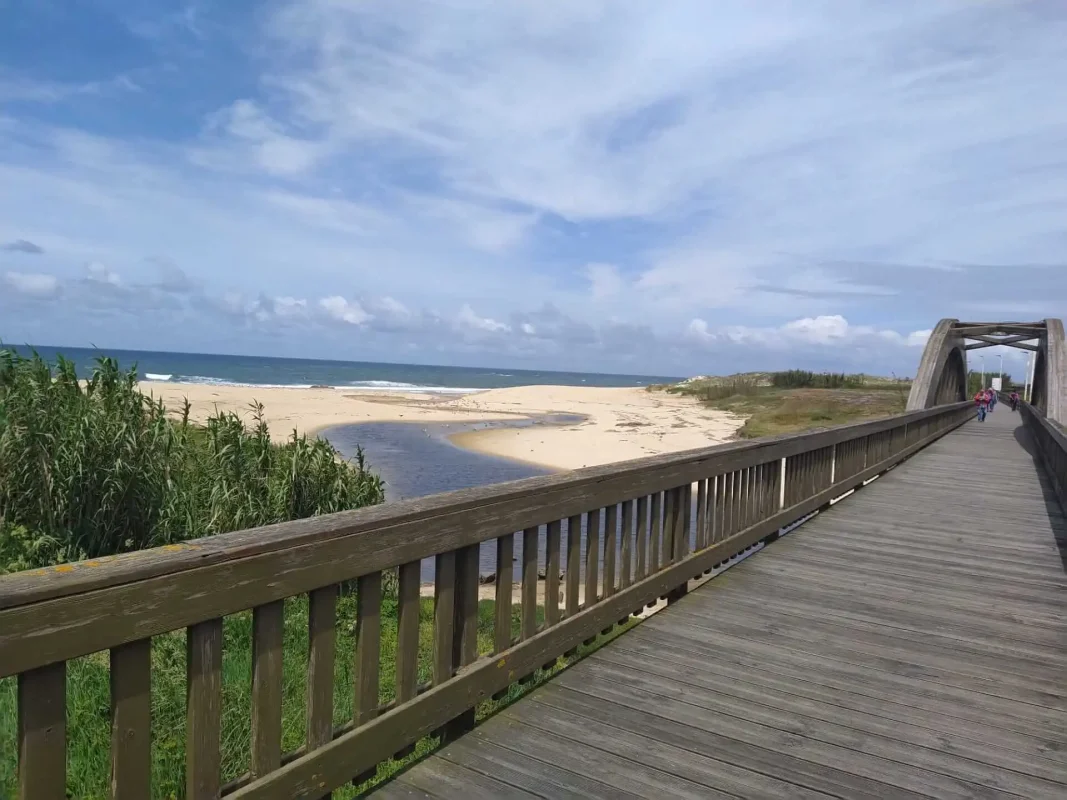
Along the Coastal Trail there is also theCoastal Path.This is an alternative route closer to the ocean, consisting mainly of boardwalks, seafronts, and dune areas.
The Coastal Trail does not replace the Coastal Path, it complements it. At many points, pilgrims can choose between following the official route or, alternatively, getting even closer to the sea, before returning to the main route. This option is especially valued by those who want to walk longer distances along the ocean and intensify their relationship with the maritime landscape. We explore in detail the Senda Litoral, what it is, how it works, and when it makes sense to choose it, in another dedicated article.
To our community
For those who have already done the Portuguese Coastal Way,what was the most memorable moment of this route for you?
And for those who still dream of doing it,what attracts you most to this coastal route?
Frequently asked questions about the Portuguese Coastal Way (FAQ)
Yes. The Portuguese Coastal Way is anofficial route of Camino de Santiago, recognized and signposted. Its official route runs betweenPortoandValença do Minho, where it connects to the common route toSantiago de Compostela.
The traditional starting point of the Coastal Way isPorto Cathedral. From there, the route mainly follows the Atlantic coastline to Valença do Minho.
As a separate route, the Coastal Way ends in Valença do Minho. From this point, pilgrims then follow the common route to Santiago de Compostela.
The Coastal Way is about150 kmlong between Porto and Valença do Minho. If you consider continuing on to Santiago de Compostela, the total distance is around280 km.
– It depends on the pace and organization of the stages:
– At a steady pace, it can be done in5 to 6 days
At a more leisurely pace, with fewer kilometers per day, it can take8 to 9 days.
The most balanced periods are:
–Spring, April to June
–Early fall,especially September
These months offer good weather, fewer pilgrims, and greater availability of accommodation.
Yes. The route is marked withyellow arrows,official markers, and identification signs.However, to ensure a safer experience, it is recommended that you walk with an up-to-date guide or a support app.
The Coastal Path is an alternative route to the Coastal Way, closer to the sea and mainly consisting of boardwalks, seafronts, and dune areas. Although it does not replace the official route, it can still be used in certain sections.
Yes. At many points, it is possible to switch between the official route of the Coastal Way and the Coastal Path, then return to the main route. This flexibility is one of the great advantages of this route.
Yes. It is considered a safe route, with good infrastructure, regular passage through towns, and a constant presence of other pilgrims, especially during peak seasons.
Yes. To obtain theCompostelain Santiago de Compostela, you need apilgrim's credential, duly stamped along the way.